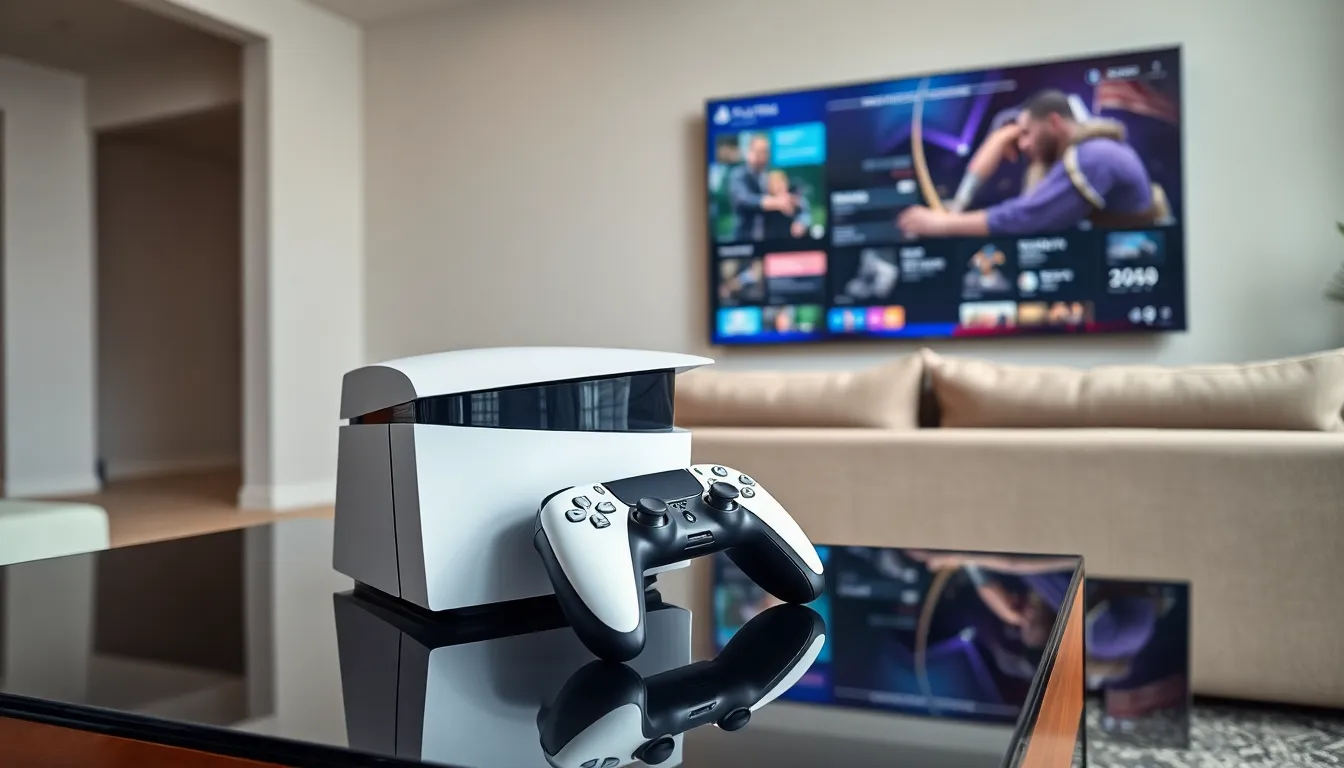
What is PlayStation? It’s Sony’s flagship gaming brand, and one of the most influential names in video game history. Since 1994, PlayStation has shaped how millions of people play, connect, and experience interactive entertainment. From its first console to the current PlayStation 5, the brand has consistently pushed gaming forward with powerful hardware, exclusive titles, and online services.
This guide covers everything about PlayStation. It explores the brand’s origins, each console generation, key features, and how PlayStation stacks up against competitors like Xbox and Nintendo. Whether someone is new to gaming or a longtime fan, this breakdown offers a clear picture of what makes PlayStation a global icon.
Table of Contents
ToggleKey Takeaways
- PlayStation is Sony’s flagship gaming brand that has shaped the video game industry since launching its first console in 1994.
- The PlayStation 2 remains the best-selling console of all time with over 155 million units sold worldwide.
- PlayStation Plus offers three subscription tiers (Essential, Extra, Premium) providing online multiplayer, free games, and access to classic titles.
- The PlayStation 5 features an ultra-fast SSD, ray tracing, 4K visuals up to 120fps, and the innovative DualSense controller with haptic feedback.
- PlayStation differentiates itself from Xbox and Nintendo through acclaimed exclusive titles like God of War, Spider-Man, and Horizon Zero Dawn.
- PlayStation Network connects over 100 million monthly active users for online gaming, social features, and digital purchases.
The History of PlayStation
PlayStation began as an unexpected pivot. In the late 1980s, Sony partnered with Nintendo to develop a CD-ROM add-on for the Super Nintendo. That deal fell apart in 1991, leaving Sony with technology and no partner. Rather than abandon the project, Sony decided to build its own console.
Ken Kutaragi, often called the “Father of PlayStation,” led the effort. His team created a machine that prioritized 3D graphics and CD-based games, a bold move when cartridges still dominated. The original PlayStation launched in Japan on December 3, 1994, and hit North America in September 1995.
The timing was perfect. PlayStation arrived as gaming audiences matured and craved deeper experiences. Titles like Final Fantasy VII, Metal Gear Solid, and Resident Evil attracted players who wanted cinematic storytelling alongside gameplay. Sony marketed PlayStation to older teens and adults, a strategy that paid off massively.
By 2005, the original PlayStation had sold over 102 million units worldwide. It didn’t just compete with Nintendo and Sega, it redefined expectations for what a gaming console could do. PlayStation proved that video games could be a mainstream entertainment medium, not just a niche hobby.
PlayStation Console Generations
Sony has released five main PlayStation consoles, each building on the last.
PlayStation (PS1) – 1994
The original PlayStation introduced CD-based gaming to the masses. It featured 32-bit processing and supported 3D graphics that felt revolutionary at the time. The PS1 library included over 7,900 games.
PlayStation 2 (PS2) – 2000
The PS2 remains the best-selling console ever, with over 155 million units sold. It added DVD playback, backward compatibility with PS1 games, and an even larger game library. Iconic titles like Grand Theft Auto: San Andreas and God of War defined this era.
PlayStation 3 (PS3) – 2006
Sony’s third console brought Blu-ray support and HD graphics. The PS3 had a rocky launch due to its high price ($599 at release), but recovered with strong exclusives like The Last of Us and Uncharted. It also introduced the PlayStation Network for online gaming and digital purchases.
PlayStation 4 (PS4) – 2013
The PS4 focused on games first. Sony simplified the hardware architecture, making it easier for developers to create titles. This console sold over 117 million units and delivered hits like Spider-Man, Horizon Zero Dawn, and Bloodborne. The PS4 Pro variant offered enhanced 4K gaming.
PlayStation 5 (PS5) – 2020
The current generation features an ultra-fast SSD that nearly eliminates load times. The PS5 supports ray tracing, 4K visuals at up to 120fps, and 3D audio. Its DualSense controller introduced haptic feedback and adaptive triggers, adding new layers of immersion. As of late 2024, the PS5 has sold over 65 million units globally.
Key Features and Services
PlayStation offers more than hardware. Its ecosystem includes subscription services, digital storefronts, and social features that keep players engaged.
PlayStation Plus is the brand’s premium subscription service. It provides access to online multiplayer, monthly free games, cloud storage for saves, and exclusive discounts. In 2022, Sony restructured PlayStation Plus into three tiers:
- Essential: Online multiplayer and monthly games
- Extra: Adds a catalog of hundreds of downloadable games
- Premium: Includes game streaming, classic titles from older PlayStation generations, and game trials
PlayStation Store serves as the digital marketplace for buying games, DLC, and media. Users can purchase content directly on their console or through the web and mobile apps.
PlayStation Network and Online Gaming
PlayStation Network (PSN) is the backbone of PlayStation’s online experience. It connects players worldwide, enabling multiplayer gaming, voice chat, and social features. Users create PSN accounts to track trophies, manage friends lists, and access purchased content across devices.
PSN launched alongside the PS3 in 2006 and has grown significantly. It now supports cross-play with other platforms for select games, party chat systems, and integration with streaming services like Spotify.
Security has improved since a major breach in 2011. Sony now requires two-factor authentication and has invested heavily in protecting user data. PSN currently serves over 100 million monthly active users.
How PlayStation Compares to Other Gaming Platforms
PlayStation competes primarily with Microsoft’s Xbox and Nintendo’s Switch. Each platform has distinct strengths.
PlayStation vs. Xbox
Both offer similar hardware power in their current generations. The PS5 and Xbox Series X target 4K gaming with fast SSDs and advanced graphics. The key difference lies in exclusives. PlayStation has historically delivered acclaimed single-player experiences like God of War Ragnarök and Ghost of Tsushima. Xbox counters with Game Pass, a subscription service that includes day-one access to first-party titles.
Microsoft’s 2023 acquisition of Activision Blizzard shifted the landscape. But, PlayStation maintains strong third-party relationships and continues securing exclusive content deals.
PlayStation vs. Nintendo Switch
The Switch targets a different audience. It prioritizes portability and family-friendly games over raw power. PlayStation focuses on high-fidelity graphics and mature content. Many gamers own both platforms because they serve different purposes.
PC Gaming
Sony has started releasing PlayStation exclusives on PC, including Horizon Zero Dawn and Spider-Man. This strategy expands revenue without cannibalizing console sales, as PC releases typically arrive 1-2 years after the PlayStation launch.
PlayStation’s advantage remains its exclusive games and unified ecosystem. The brand has built decades of trust with players who value polished, story-driven experiences.