Mobile gaming techniques separate casual players from top competitors. The smartphone gaming industry now generates over $90 billion annually, and millions of players compete for rankings, rewards, and bragging rights every day. But raw talent only gets someone so far. The difference between winning and losing often comes down to specific skills that anyone can learn.
This guide breaks down the core mobile gaming techniques that drive real improvement. From touch screen mastery to device optimization, these strategies help players level up their performance. Whether someone enjoys battle royales, puzzle games, or mobile MOBAs, these principles apply across genres.
Table of Contents
ToggleKey Takeaways
- Mobile gaming techniques like the claw grip and optimized sensitivity settings can significantly reduce response time and improve control accuracy.
- Prioritize frame rate over graphics quality—a stable 60 or 120 FPS gives you a competitive edge during crucial moments.
- Close background apps, enable gaming mode, and manage device temperature to prevent lag spikes and performance throttling.
- Develop game sense by studying minimaps, tracking enemy positions, and reviewing your own gameplay footage.
- Structure your practice sessions around specific weaknesses rather than grinding random matches for faster improvement.
- Track your stats, set concrete goals, and schedule rest days to avoid burnout and maintain long-term progress.
Mastering Touch Screen Controls
Touch screen controls present unique challenges that traditional controllers don’t. Players must work with a flat surface, limited tactile feedback, and the constant problem of fingers blocking the screen. Mastering mobile gaming techniques starts with solving these issues.
Finger Placement and Grip
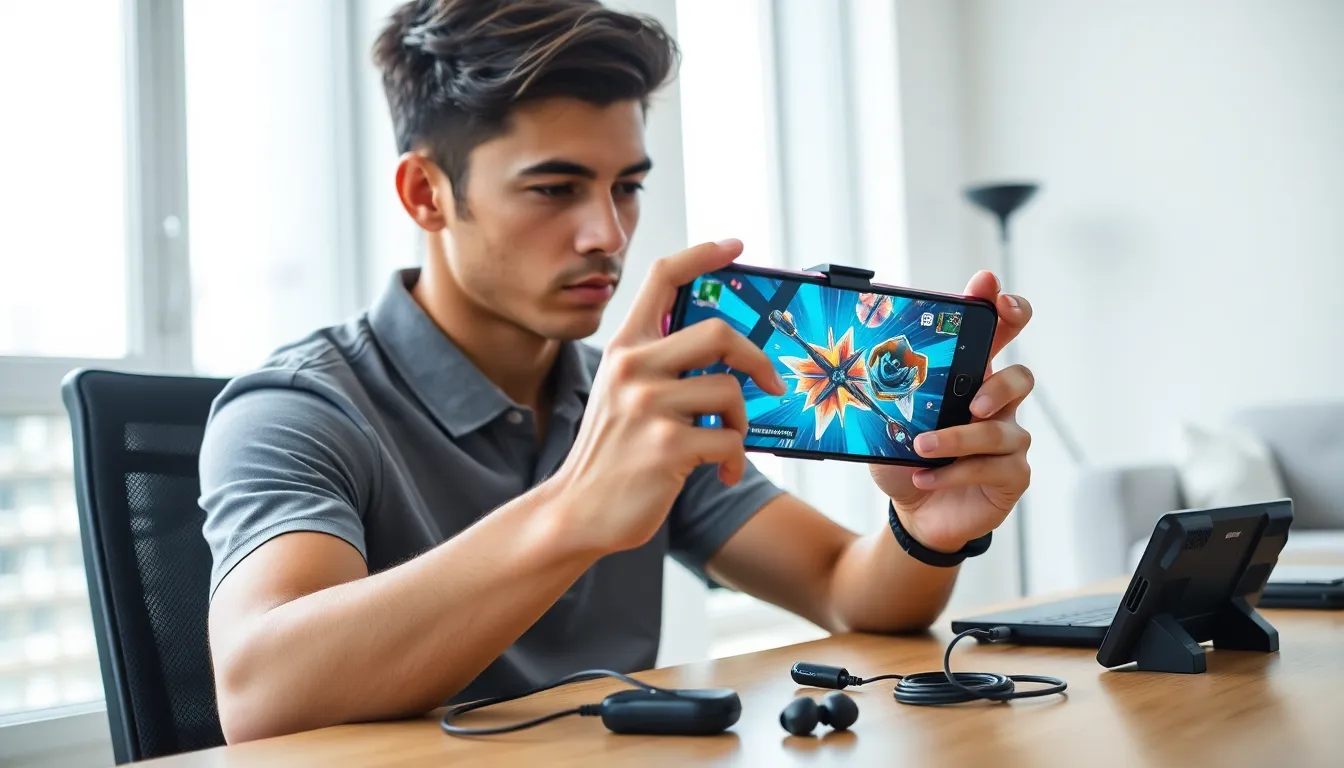
How someone holds their device matters more than most realize. The claw grip, where index fingers rest on the top corners while thumbs handle the lower controls, gives players access to more buttons simultaneously. This technique dominates competitive mobile gaming for good reason. It reduces response time and allows for complex inputs.
Players should experiment with different grip styles to find what feels natural. Some prefer the standard two-thumb approach for casual sessions. Others switch to three or four-finger setups for intense competitive matches.
Sensitivity Settings
Most mobile games offer sensitivity sliders for touch controls. Finding the right balance takes time. Too high, and small movements cause wild camera swings. Too low, and players can’t react quickly enough to threats.
A smart approach involves starting at medium sensitivity and making small adjustments. Players should test changes in practice modes before ranked matches. Many pros use lower sensitivity for precision aiming and higher sensitivity for general movement.
Reducing Input Lag
Touch latency affects every tap and swipe. Players can minimize this by keeping screens clean and free of protectors that add thickness. Some gaming phones offer higher touch sampling rates, up to 720Hz on premium devices. These small advantages add up in competitive play.
Optimizing Your Device Settings for Performance
Even the best mobile gaming techniques fall flat on a poorly optimized device. Performance issues cause dropped frames, input delays, and frustrating losses. Smart players tune their phones for peak gaming performance.
Graphics and Frame Rate Settings
Most competitive players prioritize frame rate over visual quality. A stable 60 FPS (or 120 FPS on capable devices) beats beautiful graphics that stutter during crucial moments. Players should lower shadow quality, reduce particle effects, and disable anti-aliasing if their device struggles.
Many games now include performance modes that automatically optimize these settings. Players should enable them and test different configurations to see what their specific device handles best.
Background App Management
Smartphones run dozens of processes in the background. Each one steals CPU cycles and RAM from games. Before important matches, players should close unnecessary apps, disable notifications, and enable their device’s gaming mode if available.
Some Android devices offer RAM clearing tools. iOS users can restart their phones periodically to free up system resources. These simple steps prevent mid-game lag spikes that ruin otherwise solid plays.
Battery and Thermal Management
Phones throttle performance when they get hot or run low on battery. Players can combat this by gaming with their device plugged in (using a quality charger) and keeping the phone cool. Some players use clip-on fans or cooling pads during long sessions.
Enabling battery saver mode during gaming actually hurts performance on most devices. Players should keep this feature disabled while playing and manage battery through other means.
Advanced Strategies for Competitive Play
Basic mobile gaming techniques get players started. Advanced strategies push them toward the top ranks. These approaches require more effort but deliver significant results.
Game Sense and Map Awareness
Knowing what happens across the entire game matters as much as mechanical skill. Top players constantly check minimaps, track enemy positions, and predict opponent movements. They learn spawn points, rotation patterns, and common camping spots.
This awareness comes from experience and intentional study. Players should review their matches, watch high-level gameplay, and actively think about positioning rather than running on autopilot.
Resource and Economy Management
Many mobile games include economic systems, gold, credits, energy, or similar resources. Skilled players maximize their resource efficiency. They know when to save, when to spend, and how to gain advantages through smart economic decisions.
This applies to battle royales (loot management), MOBAs (gold farming), strategy games (resource allocation), and even gacha games (currency spending). Understanding the underlying economy gives players an edge that pure mechanical skill cannot match.
Communication and Teamwork
Solo skills only go so far in team-based mobile games. Players who communicate effectively win more matches. Quick callouts, pings, and strategic planning separate organized teams from random groups.
Many players use external voice chat apps like Discord for clearer communication. Learning common callout terms for specific games speeds up information sharing during fast-paced moments.
Building Consistent Practice Habits
Improvement in mobile gaming techniques requires consistent practice. Talent helps, but dedicated training matters more over time. Players who practice with purpose see faster results than those who simply grind matches.
Structured Training Sessions
Random play produces random results. Structured practice focuses on specific weaknesses. A player struggling with accuracy should spend time in aim trainers or practice modes. Someone who dies early in battle royales should practice hot drops repeatedly.
Short, focused sessions beat long, unfocused ones. Twenty minutes of deliberate practice often produces better results than two hours of autopilot gaming.
Tracking Progress and Setting Goals
Measurement drives improvement. Players should track their stats, win rate, K/D ratio, average placement, or whatever metrics matter for their chosen game. This data reveals trends and highlights areas that need work.
Setting specific goals keeps motivation high. Rather than vague aims like “get better,” players benefit from concrete targets: “reach Diamond rank by month’s end” or “improve headshot percentage by 5%.”
Rest and Recovery
Burnout kills progress. Players who grind endlessly often plateau or decline. Taking breaks, sleeping well, and stepping away from the screen actually improves long-term performance.
Many professional players schedule rest days and limit daily practice hours. This approach prevents fatigue, maintains enjoyment, and allows the brain to consolidate learned skills.